

Our coaching services
Our coaching services +
Coaching as delivered by Alphéa'Cademy, a
Qualiopi-certified
training centre within the
Alphéa Conseil group
, provides tailored support for executives, managers, project leaders, and transformation leaders. In an operational and professional manner, it enables individuals to address and resolve the concrete challenges they face.
Our starting premise: everyone holds within themselves the solutions needed to overcome a difficulty or achieve an objective. The coach's role is not to provide answers, but to create the right conditions for them to emerge, and then turn them into action.
Our coaches are certified ( HEC Executive Coaching, narrative practices ) and are also managing partners of Alphéa Conseil consultancies, a network of 25 offices supporting businesses with their HR challenges for over 20 years. They understand firsthand the executive, team management, and transformation issues they support.
Our starting premise: everyone holds within themselves the solutions needed to overcome a difficulty or achieve an objective. The coach's role is not to provide answers, but to create the right conditions for them to emerge, and then turn them into action.
Our coaches are certified ( HEC Executive Coaching, narrative practices ) and are also managing partners of Alphéa Conseil consultancies, a network of 25 offices supporting businesses with their HR challenges for over 20 years. They understand firsthand the executive, team management, and transformation issues they support.
What is professional coaching?
Professional coaching is a time-limited form of support, structured around a predefined objective. It aims to develop the mindset, behavioural skills, and decision-making capabilities of an individual or a collective within their professional environment.
It is built upon three core principles:
It is built upon three core principles:
- The coachee drives the process:
they actively seek the process and are not assigned against their will. Without buy-in, there is no coaching
- Questioning takes priority over advice:
the coach does not prescribe solutions; they help uncover the path that aligns with the individual and their environment
- Confidentiality is absolute:
discussions remain strictly between the coachee and their coach, even when funded by the employer
Coaching is thus distinct from other forms of professional support with which it is often confused.
Coaching, training, consulting, mentoring: what are the differences?
- Training imparts technical knowledge or skills according to a predefined programme, usually in a group setting. It answers the question: "What do I need to know how to do?"
-
Consulting
delivers a diagnosis and recommendations: the expert provides the solution. It answers the question: "What should I do?"
-
Mentoring
is based on experience sharing by a more senior peer, over a long period and without a formal contractual framework
-
Coaching
works on the individual's own mindset and decision-making process. It answers the question: "How am I going to approach this in my specific situation?"
These approaches are complementary rather than conflicting: within Alphéa'Cademy , an executive might follow up an organisational consulting engagement with one-to-one onboarding coaching and management training for their teams. This is precisely the benefit of a 360° offering.

One-to-one coaching: our areas of expertise
One-to-one coaching supports personal growth in service of developing skills and enhancing an individual's contribution to business growth. It addresses personal development, anticipates challenges, boosts well-being and performance, and improves the coachee's relationships within their workplace environment.
- Developing leadership: Envisioning and managing short- or medium-term career progression, communicating with impact, driving efficiency, expanding potential, and building a positive, cohesive personal brand.
- Boosting managerial efficiency:
Adopting a managerial posture, mastering delegation, navigating social friction linked to corporate transformation, choosing key allies, breaking through relational blocks, and managing time and priorities effectively.
- Ensuring successful onboarding:
Navigating changes brought on by expanding team sizes or broadening scopes of responsibility, transitioning from expert to manager, integrating into an established team, or onboarding a new recruit—internal or external—into an existing team.
- Career management:
Steering career changes and building a personal roadmap (internal or external), devising long-term career strategies, and proactively guiding professional growth rather than enduring it.
- Long-term executive support:
Aligning executive personal values with organizational strategy, adapting to changing environments, and clearly communicating the Why / How / What to teams.
Team and organizational coaching
Beyond individual support, our coaches guide entire teams or departments through project delivery to support overall business growth. Group coaching typically comes into play when a team is underperforming, navigating a restructure, or rebuilding after a period of friction.
- Driving and leading change dictated by external factors: proactive transformation, market shifts, and competitive pressures. Aligning executives, managers, and teams around a shared purpose
- Building high-performing teams:
establishing working principles, defining the Why / How / What, driving operational engagement, and establishing clear accountability
- Defining organizational vision:
distinguishing core fundamentals (identity, values) from elements that must adapt. Setting up conditions for success—mindset, operational workflows—and sustaining performance long term
- Crisis and conflict resolution: moving past surface-level disputes to re-establish deeper, shared commitments
Types of corporate coaching
- Executive coaching : Designed for C-suite leaders and senior executives. It focuses on enhancing leadership, decision-making, communication, and stress management. Sessions cover topics such as conflict resolution, strategic planning, setting priorities, and leading change.
- Team coaching:
Focuses on group dynamics and collaboration. The coach works directly with the team to improve communication, collective decision-making, and problem-solving while strengthening cohesion and clarifying individual roles.
- Managerial coaching:
Tailored for middle management. It develops core skills in project steering, communication, problem-solving, and team leadership, supported by concrete, measurable action plans.
- Career coaching:
Aimed at employees looking to steer their professional path: identifying skills and objectives, building actionable roadmaps, and preparing mobility stages. It can be paired with skills assessments or outplacement support.
- Transition coaching:
Designed for individuals undergoing major professional transitions: promotions, relocations, mergers, or career changes. Focuses on stress management, establishing new reference points, and planning upcoming milestones.
How does coaching work at Alphéa'Cademy?
- The tripartite session : The initial meeting brings together the coachee, their employer, and the coach. It serves to clarify challenges, define expected outcomes, and agree on practical arrangements: session count, frequency, logistics, and pricing. These elements are formally outlined in a contract.
- The session cycle: One-to-one coaching takes the form of a series of sessions—typically 8 to 10 meetings of around 2 hours, spaced 2 to 3 weeks apart, held outside the usual working environment. This pacing is intentional: it allows time for real-world practice between sessions, which is essential for lasting change.
- Tailored team coaching:
Delivered over several months, this program is adapted to the specific scope (operational, cross-functional, or department team) and can combine group workshops with individual coaching for key stakeholders.
- The review session:
A final wrap-up session measures progress against the goals agreed during the tripartite meeting and identifies steps to maintain momentum independently.
Our certified coaches
- Jean-François Lacour: Certified HEC Executive Coach. Former senior executive (IKEA, Saint-Gobain), Managing Partner at Alphéa Conseil Paris IDF. Specialises in executive coaching, team coaching, and transformation management consulting.→Discover his coaching approach
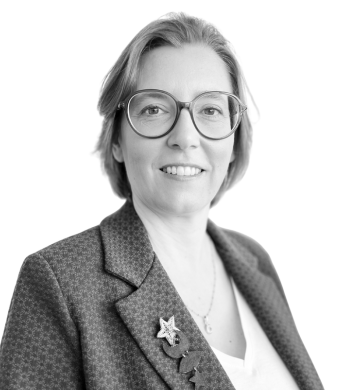
- Sandra Garnier:
Certified Professional Coach, specializing in narrative practices and Human Design. Managing Partner at Alphéa Conseil Nantes. Focuses on executive identity: executive posture, uniqueness, and alignment between values and roles.→Discover her coaching approach
Why choose Alphéa'Cademy for your coaching?
- Coaches who are active business leaders: Our coaches are not detached practitioners they actively manage recruitment and HR consulting firms. They understand firsthand the tough trade-offs, executive isolation, and performance pressures faced by the people they support.
- Dual expertise across coaching and the job market:
Backed by a network of 25 offices and over 20 years of hands-on recruitment and HR experience, Alphéa Conseil offers real-world market insight that independent coaches lack—a decisive edge for onboarding, career management, and transition coaching.
- A complete 360° offering beyond coaching:
Training, career assessments, outplacement, organizational audits, and recruitment: coaching is part of a comprehensive ecosystem, allowing solutions to be combined or phased seamlessly as needs evolve.
- Qualiopi-certified training centre:
Alphéa'Cademy is Qualiopi-certified guaranteeing structured processes, highly qualified trainers, and rigorous quality tracking.
Discover the profiles of our certified coaches:
FAQ
1. What is the difference between a coach and a consultant?
A consultant brings expertise and actionable recommendations : they deliver the solution. A coach works with the individual on their personal growth and decision-making process : they help uncover the solution that the coachee will implement themselves. Our experts practice both disciplines, but never within the same contractual framework , to avoid any confusion of roles.
2. How many sessions are included in a one-to-one coaching programme?
A one-to-one coaching programme generally spans 8 to 10 sessions lasting around 2 hours each , spaced 2 to 3 weeks apart . The exact duration is determined during the initial tripartite meeting based on the agreed objectives.
3. Is coaching confidential from my employer?
Yes, without exception. Even when funded by the employer , session contents are never disclosed to them. Only the level of achievement regarding the contracted objective may be shared , under the terms agreed from the outset by all three parties.
4. Can my employer mandate coaching for me?
No—at least not effectively. An employer can offer and fund coaching , but the employee's buy-in is an essential prerequisite for success . Enforced coaching yields no results: our coaches verify this commitment during the initial tripartite meeting and reserve the right to decline the engagement if buy-in is lacking.
5. Who pays for professional coaching?
Coaching is most often funded by the company as part of its skills development budget, or self-funded directly by the coachee when it forms part of a personal career move . Our teams can advise on the setup best suited to your situation.
6. Where do coaching sessions take place?
One-to-one sessions are intentionally held away from the coachee's usual workplace environment —at our offices, in a neutral location, or via video call depending on the circumstances. Team coaching usually takes place on-site or at a dedicated retreat location.
6. How do I choose the right coach?
One-to-one sessions are intentionally held away from the coachee's usual workplace environment—at our offices, in a neutral location, or via video call depending on the circumstances. Team coaching usually takes place on-site or at a dedicated retreat location.
6. Where do coaching sessions take place?
Beyond certifications , the decisive factor is the chemistry between coach and client. We systematically offer a no-obligation chemistry meeting with the prospective coach: if the fit isn't right, it is far better to know before signing a contract than three sessions in.
7. What concrete results can be expected from coaching?
Coaching performance is measured not by self-reported satisfaction, but by tangible behavior change: a successful onboarding , a team restoring healthy working dynamics, a de-escalated conflict , or a strategic decision finally made. That is why goals are formalized during the tripartite meeting and assessed at the end of the engagement cycle.
8. How long does a team coaching engagement last?
Team or organizational coaching is tailored on a bespoke basis and typically runs over several months, combining group workshops with individual touchpoints for key stakeholders.
9. Can coaching be combined with other services?
Yes, and this is very common. Career coaching can follow a skills assessment , onboarding coaching can follow a successful recruitment drive, and team coaching can run alongside a broader management training programme. That is the core advantage of an integrated HR solution.
Ludovic D'HOOGHECEO Alphéa Conseil - Aquilion Group
+33 (0)6 71 55 07 18
ludovic@alphea-conseil.fr
+33 (0)6 71 55 07 18
ludovic@alphea-conseil.fr