Would you like to change jobs?
 Are you one of the 9 out of 10 French people who are thinking of changing jobs? Professional reconversion is a trend. It's more than just a "fashion" trend, it's a response to profound societal changes, and requires sustained motivation to succeed. What makes a successful career change? How do you make it through and keep it? Changing profession or status is possible! Here's some advice and testimonials.
Asking yourself the right questions before embarking on a career change
Essential question to ask yourself:what's driving your desire for change? In other words: why do you want to change jobs? Many people who have undergone professional reconversion were no longer in tune with their profession or business sector, and no longer shared its values. Others had experienced a "professional failure" (redundancy, conflict with hierarchy...) and didn't want to return under the same conditions. It may also be a case of misdirection. The change may also be the result of a health problem. Many want to become their own boss and set up their own business. The question of the viability of your project then arises all the more (making sure your project is feasible, having the right contacts to guide you...).Petite sociologie de la reconversion professionnelle
The world of work reflects social change and fluctuating human aspirations. Whereas for baby-boomers, it was quite possible to have a lifelong career with the same company, today,generation Y/Z change/will change companies several times in the course of their career, or even their profession. For, above all, what matters to them is their well-being, even if it means having to retrain. After the age of 50, there's a real realization about what you want to do and what you don't want to do anymore. With a longer, better quality of life, "seniors" (in the latter part of their career) are ready to give life to their professional project and thus be in tune with themselves. Those under 30 don't yet have enough hindsight on their professional life to change jobs. And it's often an encounter (a love encounter) that's at the origin of professional reconversion.
Modus operandi: the stages of professional reconversion
Assure yourself of your motivations: to do this, it's highly advisable to talk to those close to you about your career transition project to get their feedback. People who know you well will be able to tell you honestly whether your desire for change is right for you.
Ask yourself about your new job: what skills does it require? What exactly does it involve? What aspects of your personality does it resonate with? Is the job/sector promising? It's best to do a work immersion (internship) to see how well you can project yourself into your future professional life.
Take a skills assessment: this allows you to take stock of your professional life objectively. Thanks to it, you'll know if you're sufficiently motivated to give life to your reconversion and what skills you already have and need to build your training project.
Choose a training course: the time has come to select the most suitable training course. It's possible to retrain professionally through VAE (validation des acquis de l'expérience) and finance all or part of your training via your CPF (compte personnel de formation) or grants (regional/departmental).
Organize your own training program.
Organize to facilitate your training: going back to "school" isn't a given for everyone. Some people opt for distance learning when possible, which requires a lot of rigor. Inevitably, you'll have costs to plan for, and may have to finance your training by working on the side. When an engineer in industry becomes a kinesiologist... Source AEF group.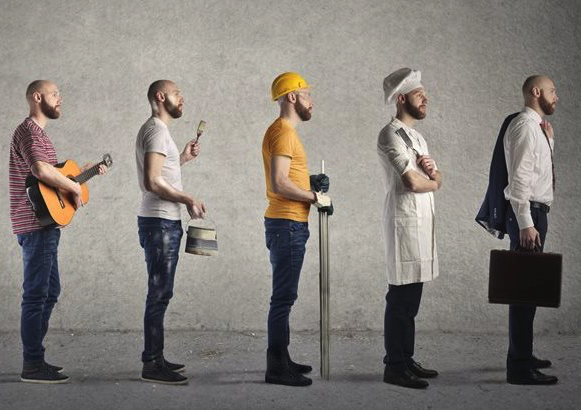
Testimony: Marion Gruson, 32 years old
"I first worked in industry as a quality manager in an SME. It was my 1st job after engineering school. I stayed there for 2 and a half years. Then I joined Protec Industrie (surface treatment company) as team manager. A year and a half ago, I changed jobs at Protec to look after the R&D department.
At the end of the day, 8 years of professional experience and 6 years of study. I didn't choose this field out of vocation; my studies were more like a by-product. It was only when I changed companies, and therefore the scope of my business, with the inevitable pressure that this entailed, that I knew I wouldn't spend my whole career in this field. I was already interested in alternative medicine. I did some research and thought about it for two years. Then I talked about it with the HR department and my project was well received. I took time off work to do internships and I completed my training over 2? years, which enabled me to smooth out the financial investment (10,000 euros). I was thus able to maintain my position and legitimacy within the company before leaving. I wanted to manage my own business and working hours. Change of profession - I moved from a technical subject to a psycho-emotional one - and change of life too - to Annecy. I'm resigning to follow my partner.
I've prepared myself for the idea of earning less. I'm going to receive unemployment benefits, as I need some financial security all the same, just long enough to get started. I'm aware of what I'm leaving behind and I'm heading off into the unknown. It's a job of accompanying others that I can do thanks to my 8 years in the industry, because I've gained in self-confidence and can now take flight."
JOIN US: